
Everyone says AI is eating SaaS. But when I look at the people and companies around me, I don’t see many cancelled subscriptions. Sure there are a few on the margins, but what’s really going on here?
The public numbers provide a strong counter-narrative. SEC filings for 14 of the largest SaaS companies (ex: Salesforce, Adobe, ServiceNow, Shopify, etc) from Q1 2024 through mid 2026 show not one reporting year-over-year revenue declines in any quarter. Stocks have fallen based on investor speculation, but we’re not seeing the exodus predicted (at least not yet).
My own experience tells the same story. I’m an AI-native founder who loves to vibe code, and so far I’ve only completely abandoned one subscription.
I think both theses are somewhat true. The gap between them matters for anyone buying, building, selling, or investing in software right now.
What’s actually getting eaten
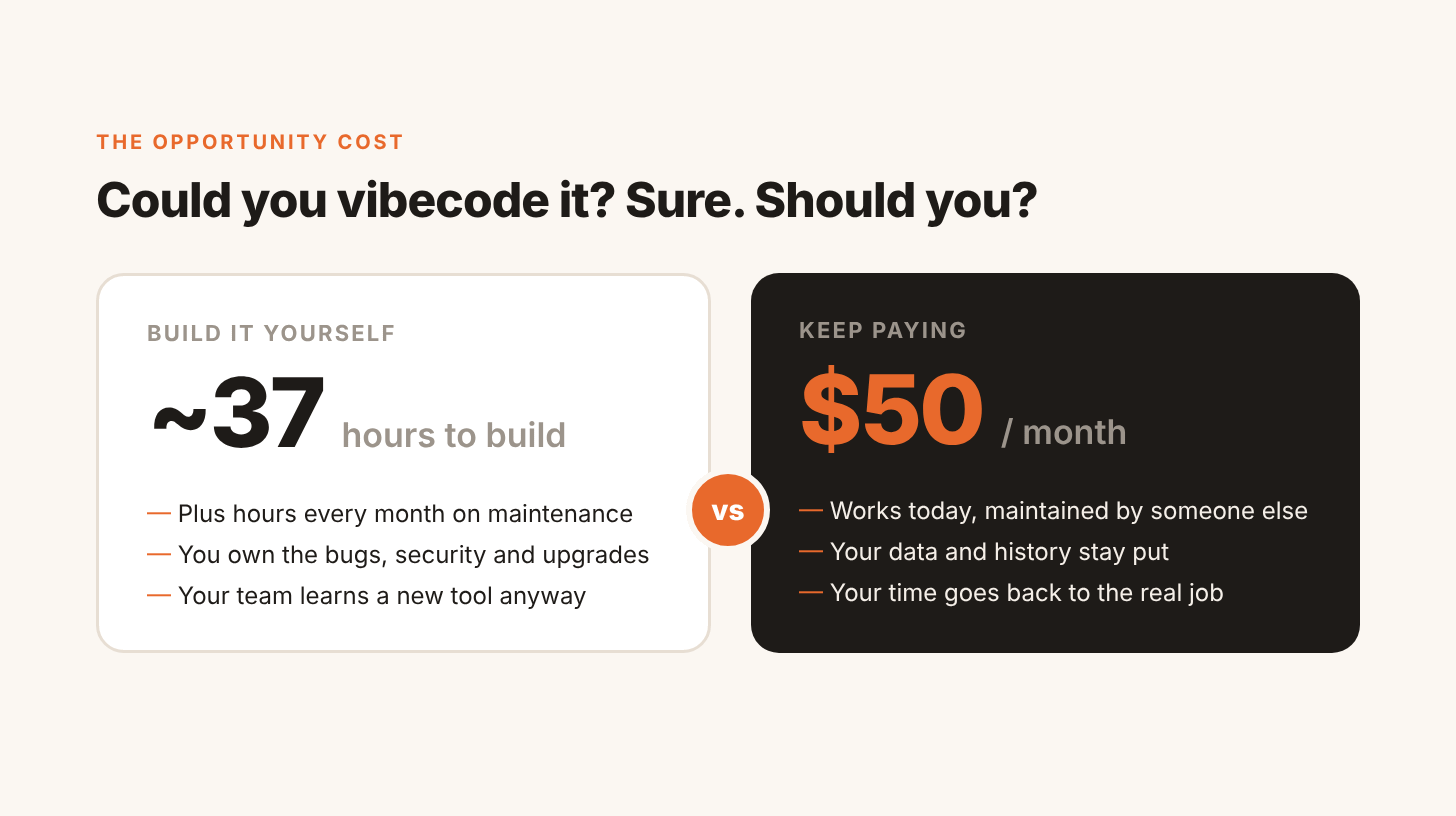
AI is eating vertical software’s price and its moat. It isn’t eating the habit of paying for software. It is eating away but certainly it has not yet swallowed the opportunity cost that comes with building production-grade software. In other words, yes, I can vibe code a new CRM for my company and spend 37 hours on it and multiple hours per month on maintenance, but $50/month is probably a better use of our money and time.
Building a decent tool is cheaper than it used to be. A small team, or sometimes one person, can stand up something useful in minutes to weeks. That puts pressure on what vendors can charge and makes it harder for any single product to stay irreplaceable. In Retool's 2026 survey of 817 builders, 35% said they'd replaced at least one SaaS tool with a custom build. But the replacements were mostly workflow automations and internal admin tools, and only 31% of those shipping AI-built software were prompting their way to complete apps. This is creating downward pressure on valuations, but it’s not dramatically changing the sales or stickiness other than on the margins.
The truth is that the reasons people keep paying were never mostly about how hard the code was to write.
Why people stay
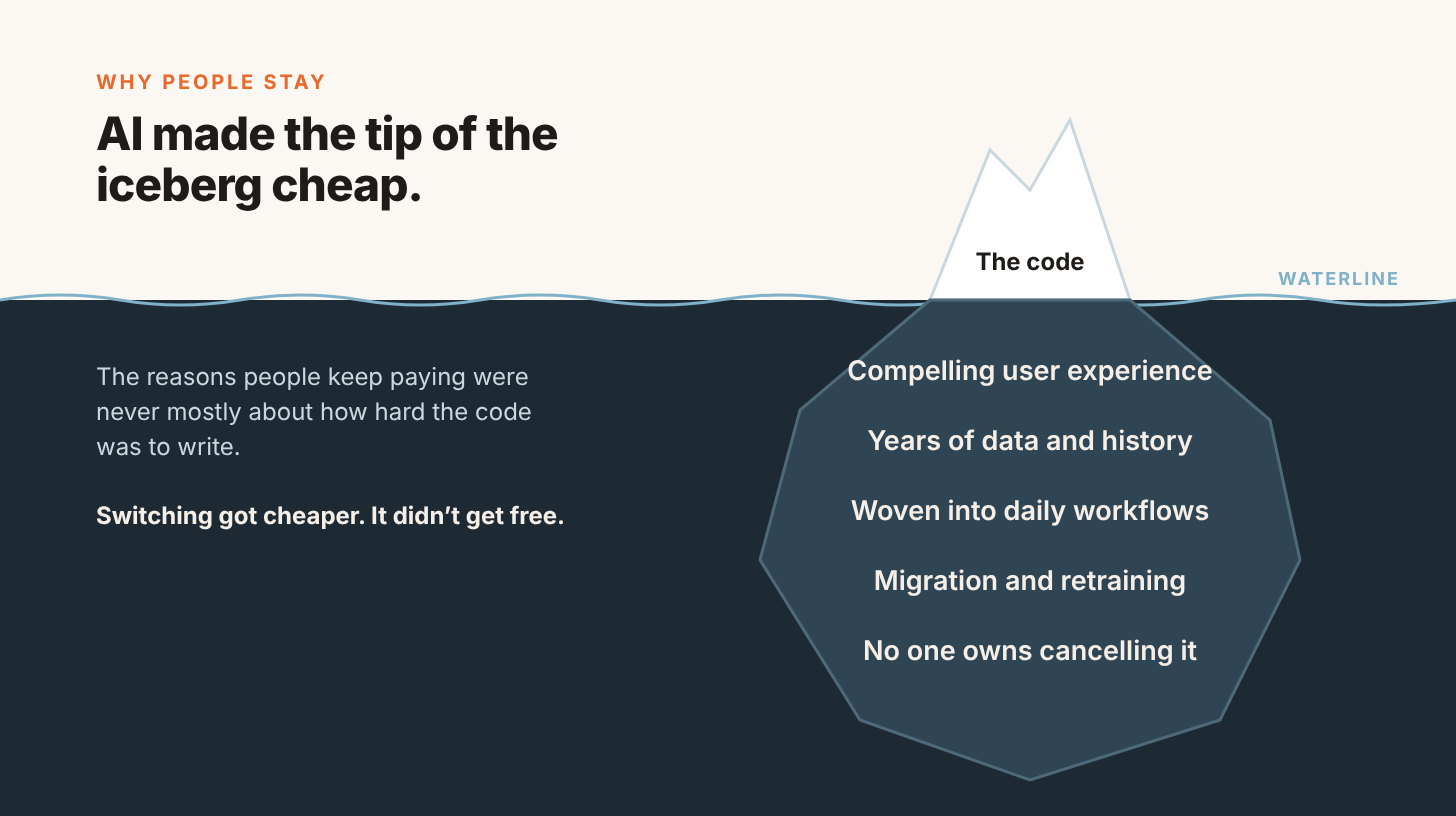
Compelling user experience. The product offers something a chat with the data cannot.
The tool holds their data and history. Years of records, configurations, and decisions live inside it.
It’s woven into daily work. Teams have habits, shortcuts, integrations, and workarounds built around it.
Cancelling means retraining and migrating. Someone has to move the data, check that nothing was lost, and teach everyone the new thing.
Nobody owns the job of cutting it. Renewals happen by default because no one’s job is to stop them.
Switching got cheaper. It didn’t get free. It still costs time, attention, and risk. So what I mostly see is renewals at lower prices or a rejection of increased fees but not mass cancellation. Big buyers say the same. In a16z's January 2026 survey of 100 Global 2000 CIOs, 65% said they prefer an incumbent's AI product when one exists, citing trust, integration, and easier procurement. The survey also found a continued shift toward buying third-party apps rather than building.
That’s a less dramatic story than “SaaS is dead.” I think it’s also a more useful one.
What that means depending on where you sit
If you buy software, you have more leverage than you did a few years ago. In a lot of the categories I watch, there seem to be more credible alternatives than there used to be, including ones you could build yourself. You may not switch. But the option changes the conversation. Gartner says 91% of IT leaders expect disruption to current SaaS models, and its advice to buyers includes, word for word, “Negotiate reduced seat-count commitments.”
If you run a software company, your moat is less about features and more about the trust, data, and workflows you’ve earned trust to provide. Price pressure is coming either way. Being easy to stay with is worth more than being hard to leave.
If you’re founding or investing, “replace the incumbent” is a harder pitch than it sounds, because the incumbent is often protected by habit and switching costs more than by product. “Connect to what they already run and do one job much better” is often an easier door to walk through.