


Product leaders who embraced generative AI now face an entirely new class of challenges to solve. Let’s survey each of them and some thinking principles for how to tackle each one.
1. What is our actual AI strategy?
Almost everyone has gotten the message from the CEO or board: we need an AI strategy; however, CPOs are struggling to set one. Part of the reason for the challenge is your AI strategy isn’t wholly separate from your product strategy.
Instead of:
Where can we wrap an OpenAI call to show we added AI?
We need to shift to:
What customer problems become possible to solve now that weren’t possible three years ago?
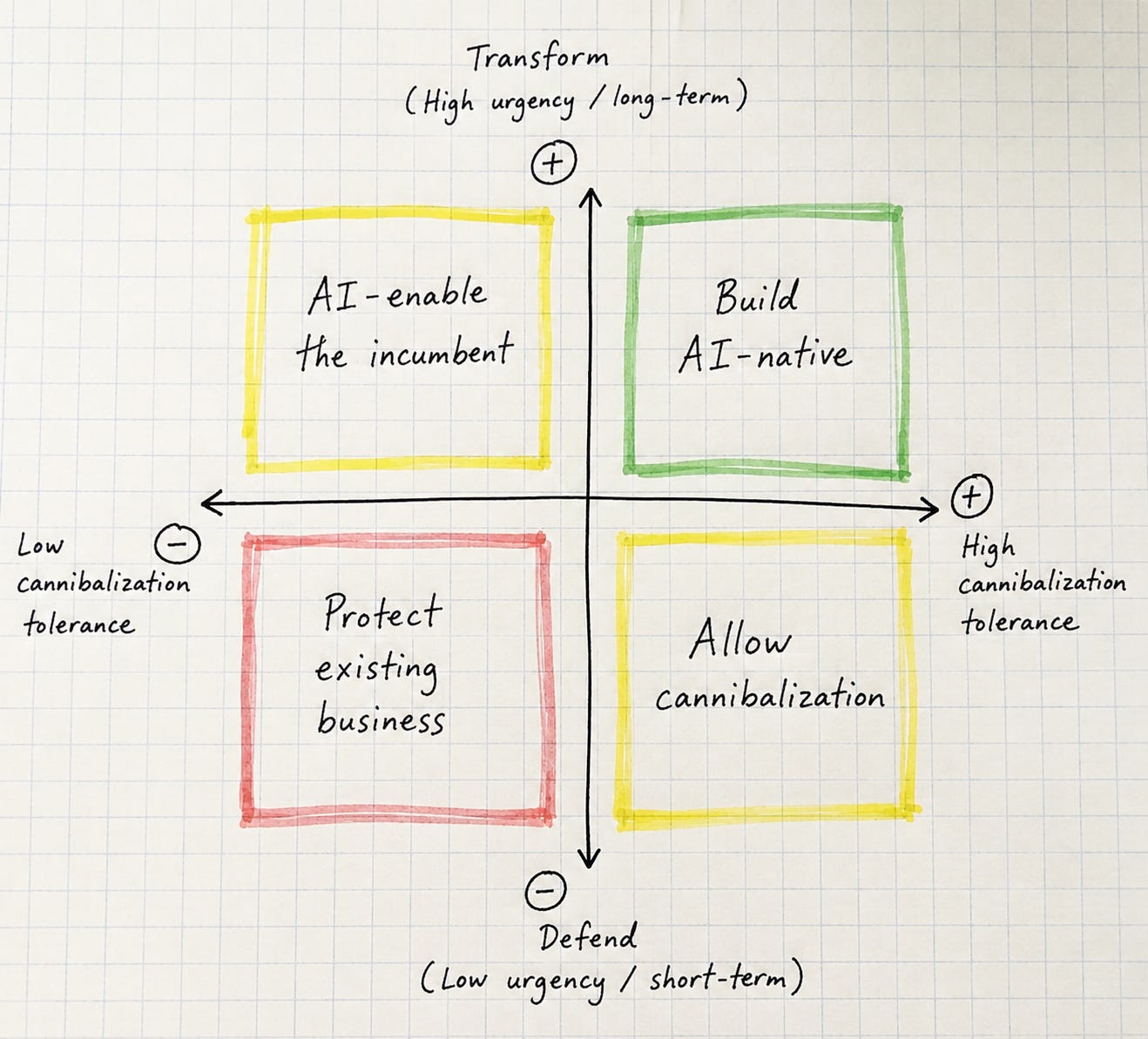
And the second-order problem is portfolio allocation. CPOs have to decide whether to:
AI-enable the incumbent product
Build an entirely new AI-native product
Allow AI to cannibalize existing revenue
Or protect the existing business
2. How does AI change the structure of our organization?
AI doesn’t just make existing teams faster. It changes which work needs to be done by humans at all.
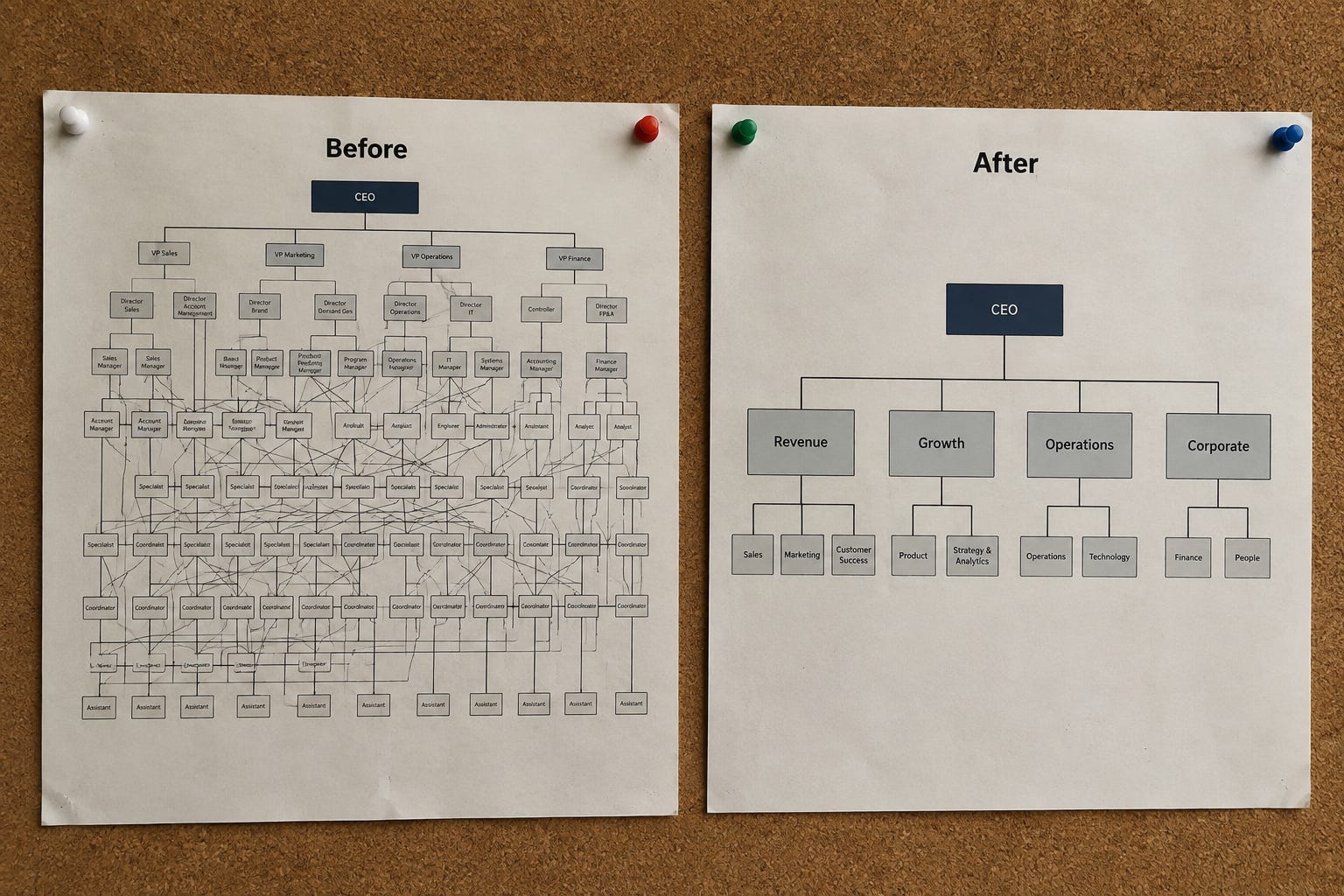
Instead of:
Giving every function AI tools and keeping the same operating model.
We need to ask:
If we designed this organization from scratch with today’s capabilities, what roles, ratios, and handoffs would still exist?
The goal isn’t necessarily fewer people everywhere. It’s fewer coordination costs, smaller teams, and more ownership per person.
3. Which bets have high ROI and how do we price for consumption?
AI makes it easy to create expensive features customers think are cool but won’t pay for.
Every AI bet needs two models: customer value and unit economics.
Instead of:
How much usage can we drive?
Ask:
What valuable outcome does this usage produce, what does it cost us, and how should we participate in that value profitably?
Pricing may need to shift from seats toward usage, work performed, outcomes, or some combination of the three.
4. With code so cheap, where do we find differentiation?
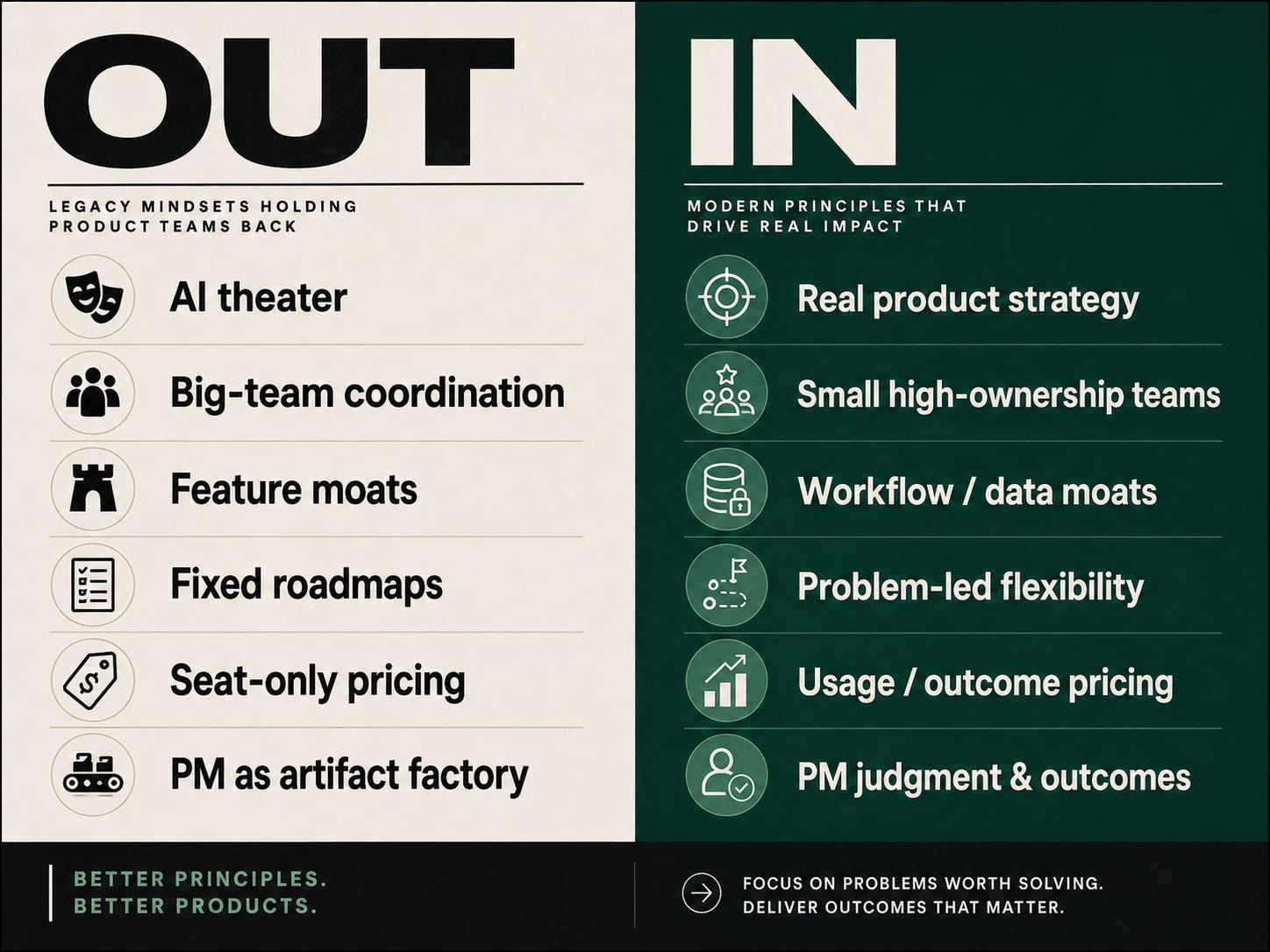
Features are becoming easier to copy. That means shipping more features is not a strategy.
Instead of asking:
What can we build that competitors don’t have?
Ask:
What gets stronger and harder to reproduce as customers use our product?
The moat increasingly lives in workflow, proprietary context, data, distribution, trust, integrations, and accumulated customer state—not the feature itself.
5. How do we steer the ship when technology is changing so rapidly?
A three-year product strategy cannot depend on a model, vendor, or technical capability that may be obsolete in six months.
We need to be stubborn about the problem and flexible about the implementation.
Hold tightly to:
Who are we serving, what problem are we solving, and why should we win?
Hold loosely to:
Which models, interfaces, architectures, and workflows get us there.
6. When is quality strong enough given that it will rarely be at 100%?
Traditional software is expected to behave the same way every time. AI systems don’t.
So “does it work?” is no longer a sufficient quality standard.
We need to define:
How often does it succeed, how does it fail, how costly are those failures, and when should a human intervene?
Off-ramps from AI into human-driven workflows and evals become core product disciplines, not just engineering tools.
7. What best practices should we instill in this era?
Most product practices were designed around scarce engineering capacity. That assumption is changing.
The answer isn’t to throw away discovery, strategy, roadmaps, or reviews. It’s to ask which practices still improve decisions and which merely coordinate work that AI has made cheap.
A useful rule:
Preserve practices that improve judgment. Eliminate practices that exist primarily to manage handoffs.
8. Do we use an AI mandate and what is our AI tech stack?
“Everyone should use AI” is not an operating model.
Teams need clear expectations about where AI should be used, which tools are approved, what data can enter them, and where human review remains mandatory.
The goal is not maximum AI usage.
The goal is making AI the default wherever it produces better work, faster, without creating unacceptable risk.
Then standardize enough of the stack and the best workflows so that every team isn’t reinventing them. Re-evaluate this constantly.
9. What should a PM really do now?
AI can write the PRD, summarize the interviews, analyze the data, research competitors, make the prototype, and increasingly help build the product.
That doesn’t eliminate product management. It exposes which parts were never especially valuable.
The PM’s job shifts toward the things that remain scarce:
Find the right problem, develop conviction with experimentation, make tradeoffs, understand customers deeply, and drive the team toward an outcome.
Less artifact production. More judgment and ownership.
10. Where did all the core product skills go?
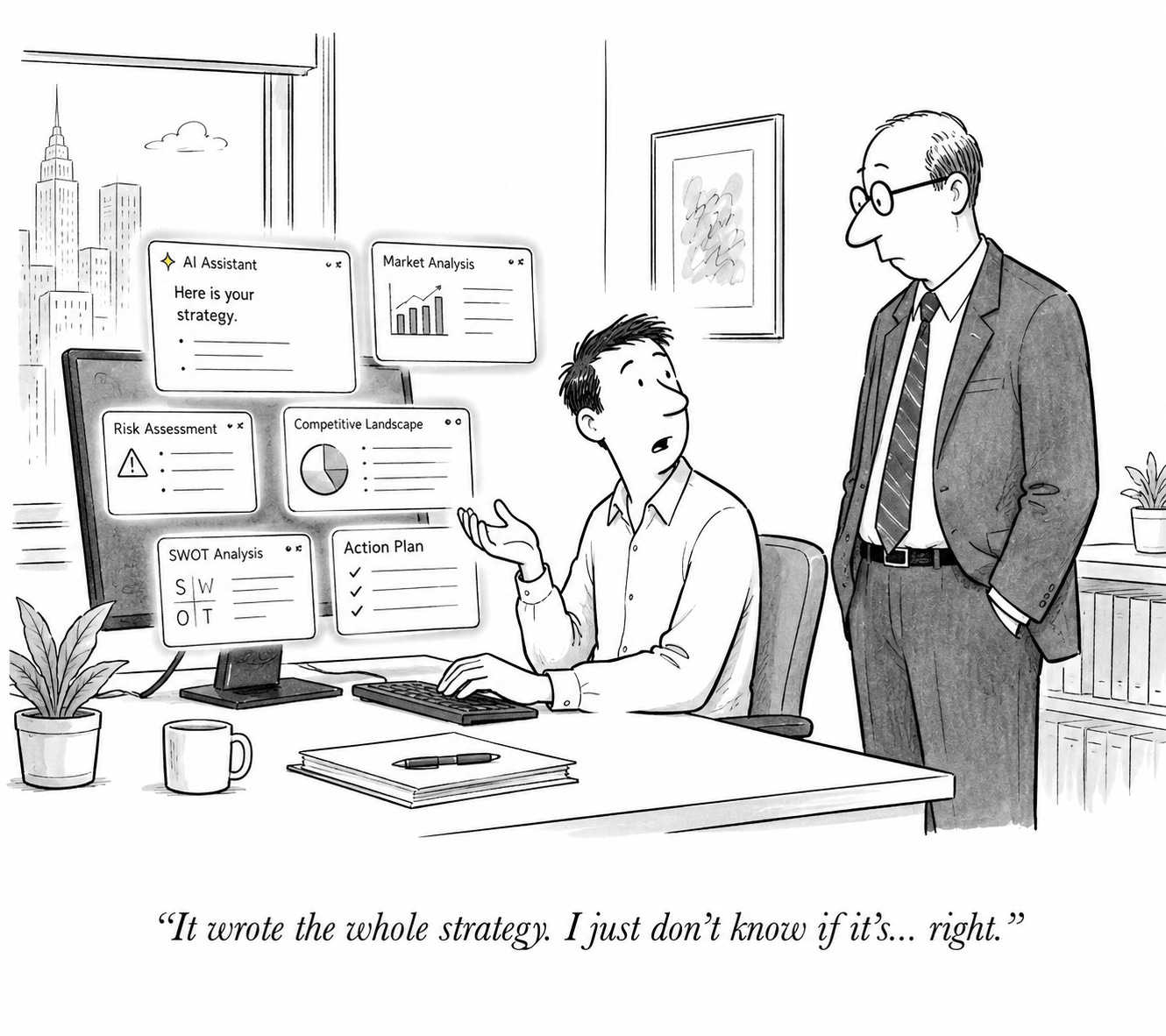
The irony of the AI era is that the newest technology is exposing weaknesses in some very old product skills. For 2 to 3 years now, a majority of product writing has been dedicated to “[old work need] with AI,” but comparatively little has been written about all the core fundamentals that are even more essential in an age where a flood of AI slop can slow teams to a crawl.
Customer discovery. Problem framing. Prioritization. Product strategy. Metrics-driven insight development. Experimentation. Writing clearly. Making tradeoffs.
AI can accelerate all of them, but it cannot compensate for not knowing how to do them.
Before teaching every PM to prompt better, make sure they know how to product-manage.
AI: now with fewer handoffs per hand